The Blue Carpet: Newcastle's Controversial Public Art
A £1.4 million glowing blue plaza outside the Laing Art Gallery divided opinion from the moment it opened. Discover the story of the Blue Carpet.
Browse every article about Monuments.
A £1.4 million glowing blue plaza outside the Laing Art Gallery divided opinion from the moment it opened. Discover the story of the Blue Carpet.
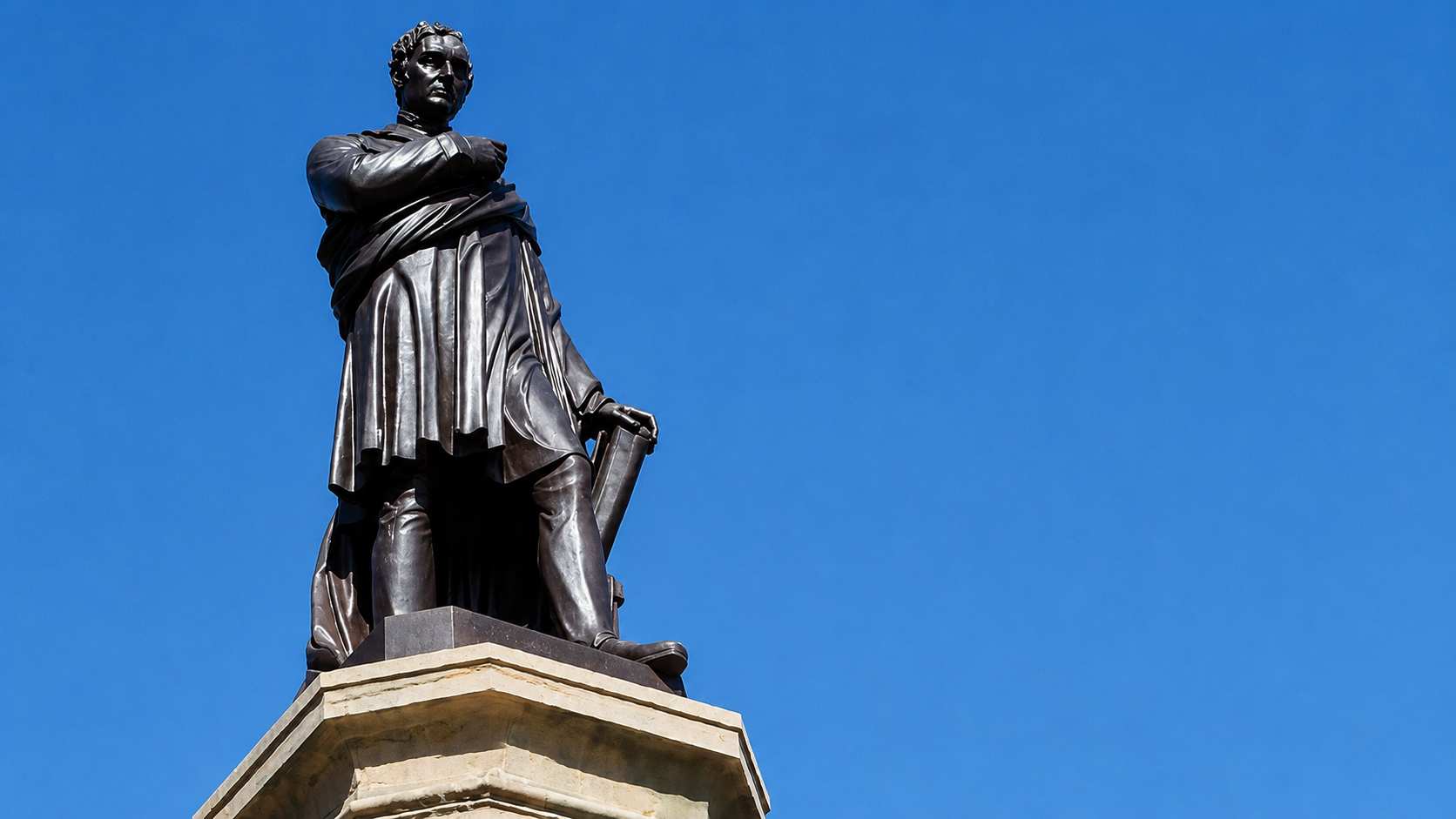
The engineer whose hydraulic inventions and armaments works transformed Tyneside is remembered in bronze within the city he helped make an industrial power.
A modest marker on Westgate Road commemorates the exact line of Hadrian's Wall, connecting the modern street directly to Newcastle's Roman origins.
A small decorative pavilion on the Quayside carries the names of ports Newcastle traded with for centuries, a modern folly with a genuine historical purpose.
A fountain sculpture at Newcastle's Civic Centre honours a poem celebrating Tyneside's ancient links with Scandinavia. Discover the story of the Five Swans.
Newcastle's most recent significant public statue honours a footballer, not a Victorian industrialist or civic dignitary. Discover the Alan Shearer statue.
A paired sculpture on Newcastle's Quayside was originally meant to breathe real fire, inspired by a genuine riverside street performer. Discover its story.
A completely different sculpture, also called River God, stands at Newcastle's Civic Centre, drawing on a classical tradition stretching back to ancient Rome.
A quiet garden at St Mary's Cathedral honours one of Tyneside's most celebrated sons, opened personally by Queen Elizabeth II in 2002.
A seven-time mayor gave Newcastle this bronze statue to mark 500 years since the city won the right to govern itself. Discover the story behind it.
A statue near Newcastle's Central Station honours the self-taught engineer who helped invent the modern railway. Discover this understated civic tribute.
A dragon-slaying saint stands guard over the memory of a Territorial battalion whose sacrifice a royal prince came to Newcastle to honour in 1923.