
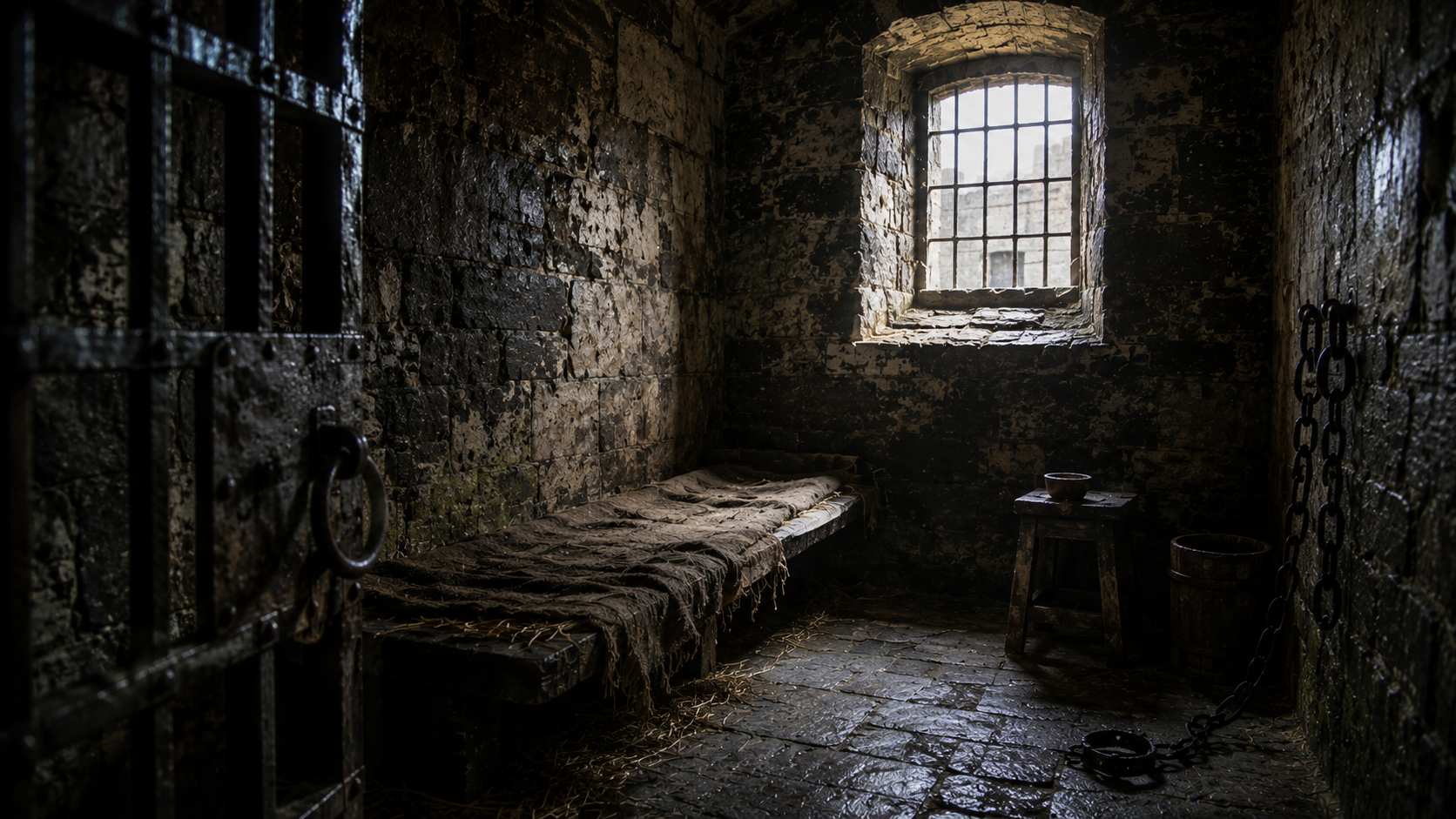
Long after Newcastle Castle's original military purpose had faded into history, the fortress continued serving one grim function with remarkable persistence: as a working prison, a role that outlasted almost every other purpose the site was originally built for.
A Function Older Than the Stone Keep
Imprisonment at Newcastle Castle predates even Henry II's twelfth-century stone keep. The infamous Heron Pit, built by the corrupt sheriff William Heron in the mid-thirteenth century, represents merely the most notorious example of a much longer tradition of using the castle's secure stone structures to hold prisoners, both those awaiting formal trial and those already sentenced to confinement as punishment in its own right.
A separate prison, known as the Great Pit, existed within a tower near the castle's Second Gate, evidence that Heron's pit was never the site's only place of confinement, but rather one particularly notorious example within a wider, ongoing pattern of using the castle's secure stone chambers for imprisonment across many centuries.
A Purpose That Outlasted the Fortress
What makes the castle's prison function genuinely remarkable is simply its longevity, continuing to serve this purpose long after its original military role had become essentially obsolete. Even as the town's own encircling wall superseded the castle as Newcastle's primary defensive structure from the thirteenth century onwards, and as the castle's broader strategic significance gradually declined across the following centuries, its thick stone walls and secure, confined chambers remained genuinely well suited to imprisonment regardless of whatever else had changed about the site's wider military relevance.
That practical adaptability, a structure built for one purpose proving equally useful for another entirely different function, reflects a broader pattern common to castle architecture more generally: the same thick walls, secure gates and confined interior spaces that made a building an effective fortress also made it an equally effective prison, requiring minimal structural adaptation to serve either purpose.
Decay and Continued Grim Use
Even as the castle physically deteriorated through neglect during the seventeenth and eighteenth centuries, at points falling into such disrepair that parts of the structure were repurposed for entirely mundane commercial uses, its role as a place of confinement and punishment persisted in various forms. The Black Gate's own later history as slum housing, documented separately, existed alongside this continued, if increasingly informal, association between the castle complex and imprisonment, a grim thread running through the site's history even during its periods of greatest physical decline.
Records of specific individual cases, including the 1301 imprisonment of two men accused of murder held in the gaol above the Heron Pit while awaiting sentencing, illustrate how directly the castle's prison function connected to its judicial role more broadly, imprisonment and formal legal proceedings operating as two closely linked functions carried out within the very same complex of buildings.
A Legacy Preserved in Stone
Newcastle Castle's long prison history remains genuinely visible today, preserved specifically within the interpretation and exhibitions that now guide visitors through the restored Keep, including direct access to chambers that once held genuine prisoners across many centuries of continuous, if evolving, use. Rather than glossing over this grimmer dimension of the castle's history in favour of its more celebratory royal and ceremonial associations, modern interpretation at the site engages with it directly, giving visitors genuine insight into conditions medieval and early modern prisoners actually faced within these same thick stone walls.
Displays throughout the Keep make a deliberate effort to present this history from the prisoner's perspective as much as the gaoler's, a curatorial choice that gives the castle's grimmer chapters a genuinely human dimension rather than reducing them to a simple list of dates and legal proceedings.
That honest engagement with the castle's darker history, alongside its more celebrated royal and architectural significance, gives modern visitors a genuinely fuller, more accurate picture of what medieval castle life actually involved for everyone who passed through its gates, not merely the kings, sheriffs and constables whose names survive most prominently in the historical record.
