
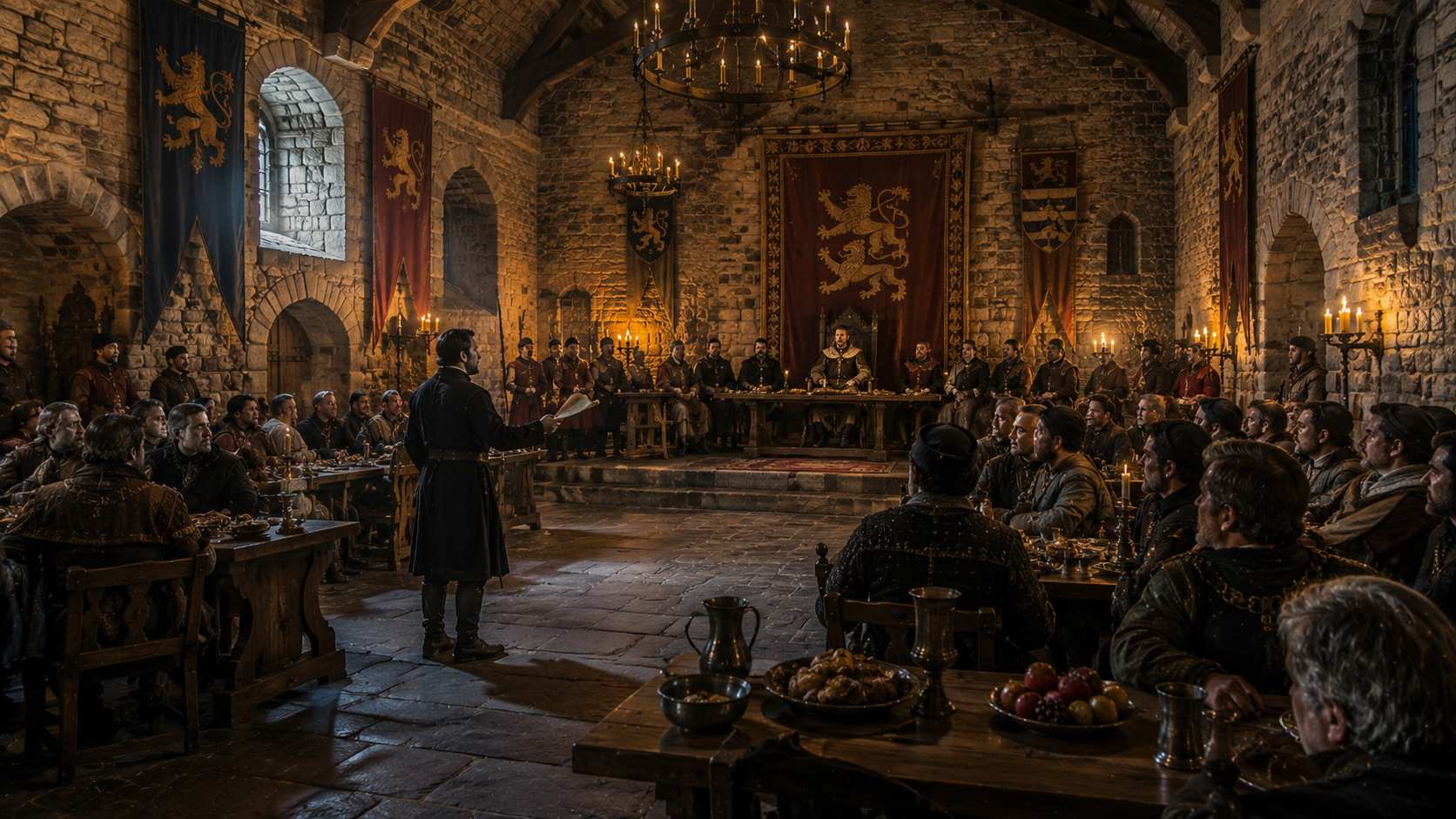
If the Heron Pit represents the castle's darkest function and the Royal Chapel its most refined, the Great Hall occupied the space in between: the genuine working centre of castle life, where feasting, justice and royal business all happened within the same large, imposing stone chamber.
The Castle's Principal Public Space
Located within Henry II's twelfth-century Keep, the Great Hall functioned as by far the largest open interior space anywhere within the fortress, a genuinely substantial room designed to accommodate the full range of formal and ceremonial activity a working royal castle required. Unlike the more specialised, restricted spaces elsewhere in the Keep, the dungeon pits, the private chapel, the Great Hall was built specifically for gathering, for hosting the kind of large formal occasions that demonstrated and reinforced the castle's status as a genuine centre of royal power in the north of England.
That combination of scale and centrality made the Great Hall the natural setting for essentially every major formal event the castle hosted, from feasts celebrating royal visits or significant occasions, through to the considerably more sombre business of formal legal proceedings.
Where Justice Was Dispensed
Beyond its role hosting feasts and audiences, the Great Hall served a genuinely significant judicial function, providing the setting for the Sheriff's court, where cases involving the castle's wide administrative jurisdiction were heard and decided. More serious matters, crimes including heresy and murder, fell under the authority of the assize court, a more formal judicial proceeding incorporating direct royal representation, reflecting the gravity of offences serious enough to warrant the crown's own judicial attention rather than purely local resolution.
This judicial role connected the Great Hall directly to some of the castle's darker associated spaces. Prisoners held in the nearby Heron Pit or Great Pit, awaiting trial for whatever offence had landed them in the castle's custody, would very likely have eventually faced judgement within this same hall, their fate decided in the same substantial chamber that, on other occasions, hosted considerably more celebratory royal feasts and formal audiences.
A Room for Every Occasion
That dual character, a single space serving both celebration and judgement, feasting and formal legal proceedings, reflects how thoroughly medieval castle architecture prioritised practical, flexible use of limited interior space over the kind of rigid single-purpose room allocation more common in later architectural periods. The Great Hall needed to function equally well as a setting for royal hospitality and as a genuinely serious court of law, sometimes within the very same week, or even the same day.
Royal audiences held within the Great Hall gave visiting dignitaries and local nobility direct access to whatever royal authority the castle's Constable, or an actual visiting monarch, chose to exercise, making the room a genuine seat of practical governmental power for the wider Northumberland region, not merely a ceremonial backdrop for formal occasions.
A Space That Still Hosts Gatherings
The Great Hall's long tradition of hosting significant gatherings continued well beyond its original medieval function. When the Society of Antiquaries of Newcastle upon Tyne secured a long lease on the castle in 1848, having successfully campaigned against railway-driven demolition proposals the previous year, the society celebrated their new acquisition with a Grand Antiquarian Banquet held within the very same Great Hall that had once hosted medieval royal feasts, a fitting continuity linking the castle's original ceremonial function directly to its later rescue and preservation.
That continuity has persisted into the present day, with the hall still periodically used for events and gatherings that echo, however faintly, its original medieval purpose, a genuinely rare example of a nine-hundred-year-old room still being used for broadly the same kind of formal, celebratory occasion it was originally built to host.
Visitors touring the Keep today can still stand within this same substantial chamber, imagining both the formal grandeur of a medieval royal feast and the considerably more anxious atmosphere of a Sheriff's court in session, two entirely different kinds of medieval drama that once shared this exact same stone-walled space.
