The Black Death and Plague in Medieval Newcastle
The Black Death reached England in 1348 and struck trading towns like Newcastle hard. Discover how plague repeatedly shaped medieval and early modern Newcastle.
From the Roman fort of Pons Aelius to the shipyards that armed an empire, this is the story of Newcastle upon Tyne told era by era. Browse articles covering the people, buildings and events that shaped the city, or filter by period below.
The Black Death reached England in 1348 and struck trading towns like Newcastle hard. Discover how plague repeatedly shaped medieval and early modern Newcastle.
From modest origins to nine terms as mayor, Roger Thornton became medieval Newcastle's wealthiest and most influential merchant. Discover his remarkable rise.
Newcastle's Theatre Royal, dating to Grainger's Victorian redevelopment, survived fire and decline to become a thriving modern cultural landmark on Grey Street.
In 1974, sweeping local government reform created the metropolitan county of Tyne and Wear, redrawing Newcastle's administrative map after centuries.
Founded in 1239, Blackfriars is Newcastle's only surviving medieval friary. Discover its royal visitors, its guild afterlife, and a curious footballing legend.
Blackfriars, Whitefriars, Greyfriars, Austinfriars and the Trinitarians: medieval Newcastle held five separate friaries within its walls. Discover them all.
In 1897, a small Tyne-built ship gatecrashed the Royal Navy's own review and outran its patrol boats. Discover Charles Parsons and the invention of Turbinia.
Around AD 200, Emperor Septimius Severus led a major campaign into Scotland, likely rebuilding Newcastle's fort in stone along the way. Discover his legacy.
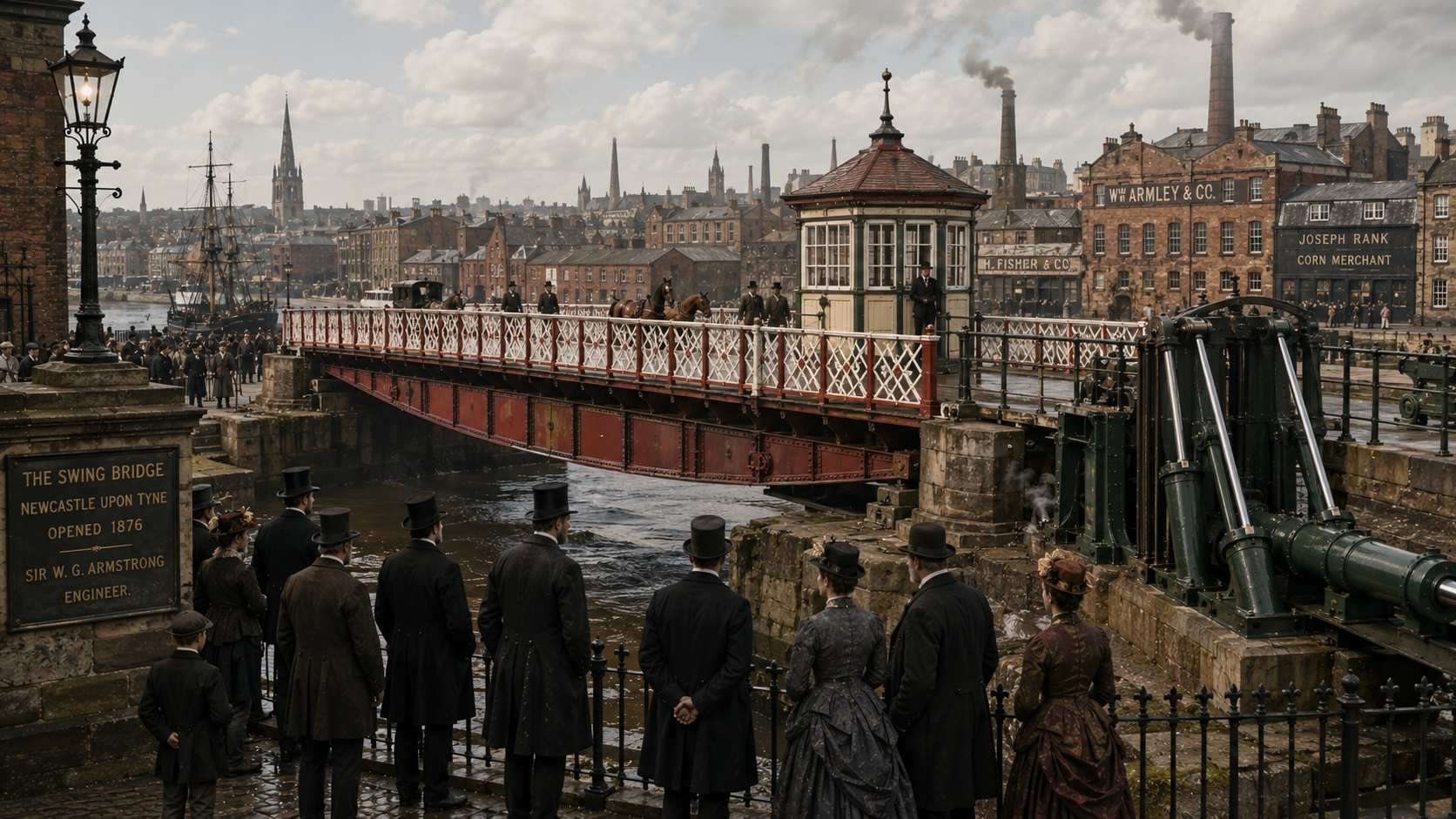
Opened in 1876, Newcastle's Swing Bridge used Armstrong's own hydraulic technology to open the Tyne to modern shipping. Discover this Victorian engineering feat.
Before Armstrong's Elswick Works, the Hawks family built Tyneside's leading ironworks, supplying the chains and ironwork behind some of Britain's great bridges.
From Irish dockworkers to postwar Commonwealth migration, discover how successive waves of newcomers have shaped modern Newcastle's communities.
As industrial Newcastle's workforce grew, cooperative societies offered workers fair prices and a share in profits. Discover the movement's strong Tyneside roots.